At the heart of Ghana’s savannahs, on the outskirts of Tamale (the ‘place of shea’) in northern Ghana, Eco Restore and Red Clay
Studios are rewriting the future of the Shea industry. Emerging as more than a gallery, Red Clay Studio is a living sanctuary created by
Ghanaian artist Ibrahim Mahama. It is a living laboratory where old planes, trains and sculptural monuments rise alongside classrooms and community spaces, a sanctuary where art restores memory, culture and imagination.
Just as art restores memory and culture, Eco Restore is restoring the land itself, proving that creativity and ecology can thrive side by side.
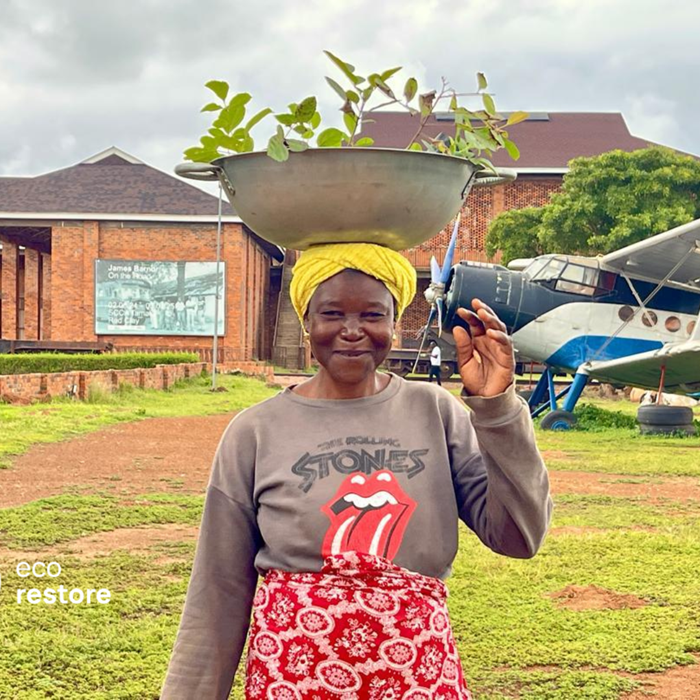
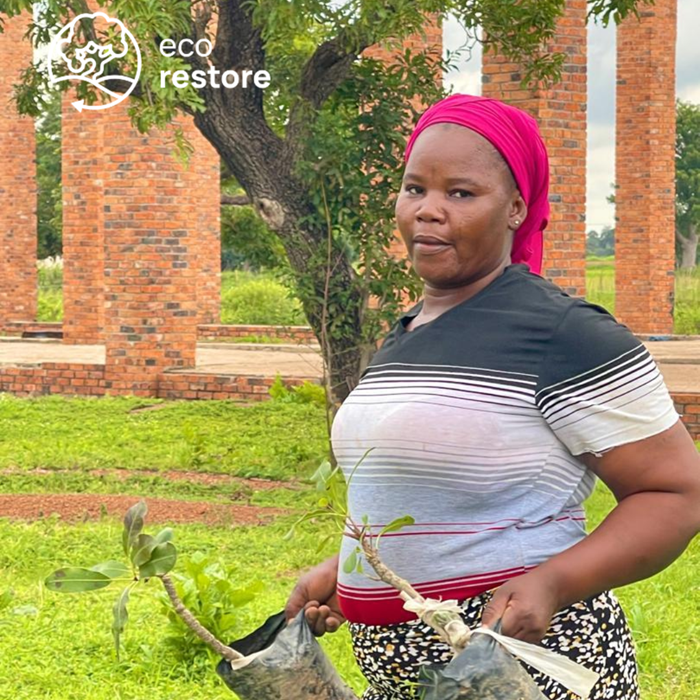
Together, we are growing back 1,200 grafted shea trees and 670 seedlings of other indigenous tree crops (a total of 13 species), raised by Eco Restore for the Ghana Shea Landscape Emissions Reduction Project GSLERP), which is funded by the Green Climate Fund (GCF) and implemented by the United Nations Development fund (UNDP), the Forestry Commission (FC) Ghana (REDD+) and the Global Shea Alliance (GSA). These will not just be seedlings in the ground, but a bold investment in climate resilience, women’s empowerment and sustainable markets. All species will be accompanied by an educational signboard, providing visitors with knowledge on each tree and its beneficial uses.
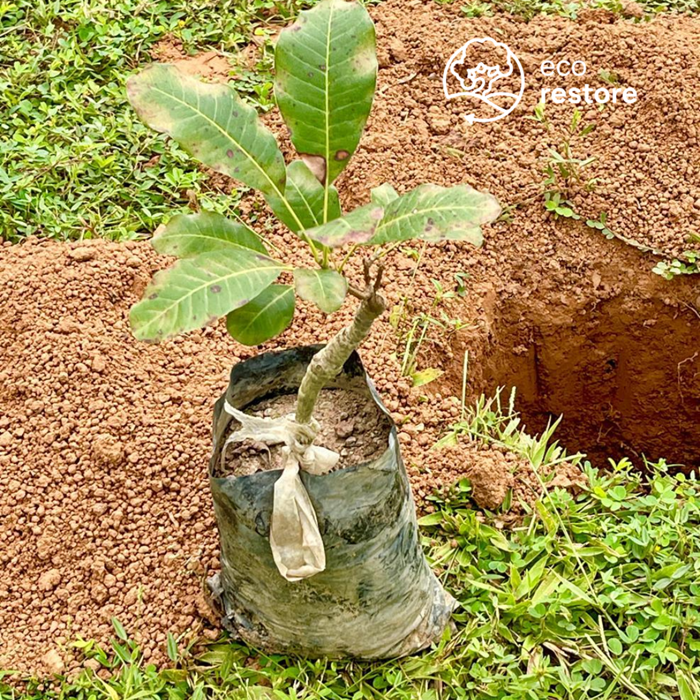
With advanced grafting and propagation techniques, shea trees can now bear fruits within 3–5 years and in some cases even earlier, turning shea into a practical livelihood crop well within a farmer’s lifetime.
This breakthrough not only supports women and youth enterprises but also gives Red Clay visitors a chance to see the results of decades of research in action, a living demonstration of innovation now ready to be incorporated into our agroforestry parklands to restore soils, generate income and build climate resilience
Impact
The partnership is transforming barren spaces at Red Clay Studio into a fertile and shaded land,
where shea and other indigenous trees are returning as symbols of ecological balance and community prosperity. Women and other visitors will gain knowledge on improving their income whilst both artisans and farmers are learning regenerative techniques. The project shows how restoration can deliver cultural, environmental and economic returns.
Lesson Learned
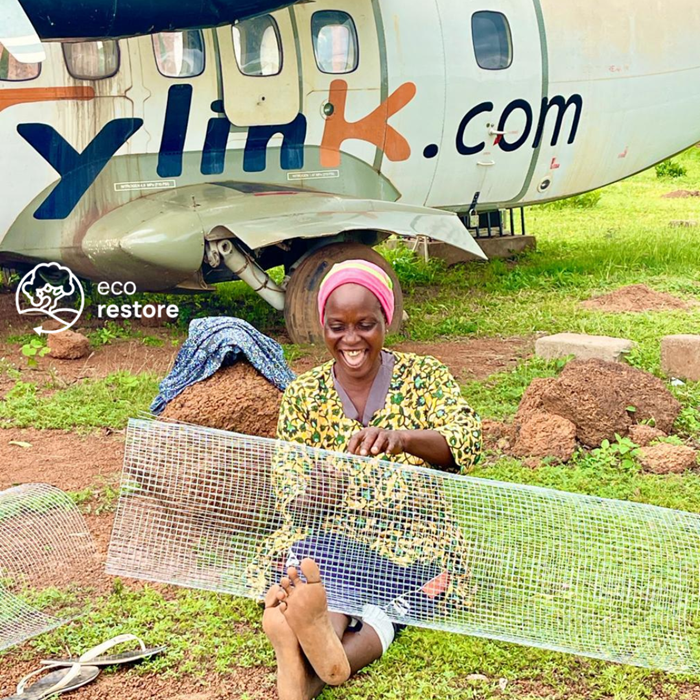
Restoration is never without challenges. This season, the rains stopped suddenly, forcing us to pause planting for many weeks. It was a vivid reminder of our climate’s unpredictability and the importance of adaptive strategies.
These lessons reinforce our commitment: that restoration
is not an event, but a process of care, resilience and
innovation.
Looking Ahead
As these biodiverse stands of trees grow, they will anchor soils, feed pollinators, support women’s enterprises and strengthen the shea industry’s sustainability. Together, Eco Restore and Red Clay Studio are proving that art and ecological restoration are both acts of creation, one nurtures imagination, the other nurtures the earth and both inspire futures rooted in resilience.